Tuesday, January 22, 2013

Where to Find Discount Theater Tickets in Los Angeles

Seeing more theater is a laudable goal, but it's only possible if you can afford to do so. Before you pull the trigger on a full-priced theater ticket, search for the title of the show at each at the following websites. There's not need to pay full-price when you can pay half-price.
  • Goldstar: They've got a broad selection of local events including a lot of the big touring productions and ongoing local favorites like movie tickets to the The Cinefamily.
  • Plays411: Can't say I love the accessibility of their website's design, but a good selection of discount tickets for a bunch of the independent theaters.
  • LA Stage Alliance Tix: A broad swath of the LA indie theater scene.
  • Hot Tix for any of the Center Theater Group shows at the Ahmanson/MarkTaper/Geffen. Call three weeks or less before the show and get $20 tickets. Limited to two per household per call.
If you're trying to find a good show to see, you could do worse than Bitter Lemons which is sort of like a micro-scale rotten tomatoes for the LA theater scene. But as with most theater, even with good reviews you might do well to assume the worst so that you can celebrate those rare moments of transcendent beauty only found in live performance.

Wednesday, June 1, 2011

Advice for Beginning Actors

I received an email from a mother asking for advice for her 18yo son who is about to embark on an acting career. Here is my response:

I might not be the best person to ask as I'm no longer pursuing acting as a career, and a tenet I try to follow is: only take advice from people who already have what you want or who have been where you're planning to go. That said:
  1. Figure out why you want to act, and stay true to that. If you want to act because it's fun - then be wary of doing anything that robs you of that joy.
  2. Develop a skill other than acting that you can use to pay the bills through flexible part-time employment. This is critical to self-esteem, and does not hem in your liberty as you might suspect but actually frees you to pursue your dream. Harrison Ford was one heck of a carpenter and Jeremy Renner flips houses. I made a living doing animation, education consulting, and tech support - all incredibly flexible, and paid well enough that my "day jobs" never took up more than 20hrs a week.
  3. Develop fiscal responsibility *now* - put together an emergency fund (3-6mo living expenses), contribute 10%+ of all of your income to a retirement account - if you think being a starving artist is tough, try being a starving septuagenarian with no job prospects. Again, this will free you to pursue your acting career. Money worries are all consuming and will totally sap energies you would otherwise be directing to your career. Also, getting rich doesn't solve money problems it magnifies them; so get your head on straight now.
  4. Seek out mentors personally (sorry Mom) and listen to them. Have an acting hero? Write them a letter telling them what you most respect about them, and ask them a single specific question.
  5. Seek out like-minded artists: find other actors, directors, writers. Spend time with them. At all costs avoid: cynical types with no drive. You won't notice it as it happens, but they will bring you down. You are the average of your five closest friends. Once you have this network of artists, help them in any way you can without compromising yourself.
  6. Spend a year in one of the big markets, if you're 18 and can pass for younger you are very castable. Find out what you don't know; it'll be a lot. Then GO TO COLLEGE and ask questions, lots of them. If you can stand it, get a minor or second degree that will help you out with that side-job. After that, go back to one of the big markets and try again.
  7. Self-produce. There is no one who cares enough about your success to do the work for you; you have to make your own opportunities. It's great that you want to write and make comics. Story -> comic -> screenplay is one of the primary movie generation pathways these days.
  8. Work as an actor whenever you can. You have a lot to learn. Even crappy student productions will teach you patience and humility - these are important skills. Background work is helpful in that it demystifies being on-set. Do it long enough to work out the jitters but leave before the cynicism of the other background actors poisons you.
  9. Do not ever allow someone to belittle you, you are a human being with inherent worth.
  10. Be a professional. Show up early (being late once is enough to kill your career's momentum). Be prepared. Do your work. Don't be a distraction.
  11. Be respectful. There is not a person on set who cannot teach you something if you actually take the time to listen. Crew members love film/theater more than you could ever hope to - learn their names, learn about their lives, and give them the thanks they deserve.
  12. Find an accountability buddy. I have a friend I call once a week for a career strategy session. We set goals and provide accountability. We text each other every single day to ensure we're on track. This person cannot be a flake. They must be driven and you must respect them, otherwise the system doesn't work. When you are only responsible to yourself, you won't accomplish much. You can move mountains if you believe that just one other person cares whether you do it or not.
  13. There is no shortage of people happy to separate a fool from his money. If someone is promising you a silver bullet that will land you an agent, get you a job, or a make you a star: they are liars and cheats (even if they don't realize it); walk quickly in the other direction. Listen to the advice of people who have achieved what you want to, the good ones are happy to give it for free.
  14. See plays, watch movies, get out of your house/apartment. Ain't nothin' gonna happen unless you go out in the world and interact with people.
  15. An acting career is a marathon, not a sprint. There will be times where your light shines brightly, and others where your agent seems to be avoiding your calls. Do those things that feed your artist and keep you excited about the craft. Do readings with friends, stage impromptu shows in your living room, shoot stupid web videos. Know that things will get better.
  16. As an actor you are a small business (folks like Will Smith are their own private industries) - dedicate office hours to the business end of your career. Every day M-F you should be spending 30+min on marketing and career strategy. This is on top of any work you're putting into your craft (and you should be doing that regularly too).
  17. Live your life. You'll spend years waiting for your big break and for your life to "finally begin". Don't wait. Take that vacation (that you've saved for), do exciting things, learn as much as you possibly can about the world and its inhabitants. Do something that scares you (even if it's just saying hello to that cute girl/guy) every day.
If you've found this helpful, please do me a favor and pay it forward. My buddy JP is producing a one man show (see #5, #7, #8, #15) and is raising funds so that he can share it with audiences across the country. You can contribute to his kickstarter campaign (no amount is too small) here: http://www.kickstarter.com/projects/johnpaulkarliak/making-mamas-proud-the-2011-donna-madonna-tour

Wednesday, April 20, 2011

What Now? Life After Acting

It's been a little over two months since my last post, and whenever I share the "news" with something their first question is: What now? For a while there I was really flailing, but I seem to have come up with some answers.

As a creative outlet I have started OurLosFeliz.com where I do local reporting on my neighborhood. It's good to be blogging again, and I'm finally putting my DSLR to work shooting photos and video. Updates come fast and furious, so you'll probably only want to subscribe if you live in the LA area.

I'm also spending a few hours a week writing a spec screenplay with a very talented friend of mine about one of the founders of the Gay Civil Rights movement. It's a really fantastic story, and I'm glad to still be involved in film making - it also makes it easier to justify my bachelor's degree.

My new career goal is to work as a technical director in feature animation at a studio like Dreamworks or Pixar. In light of that I've been burning the midnight oil learning the Python programming language and developing tools for 3D animation software.

In the six months or so it's going to take to get my skills in order, I'm planning to do freelance motion graphics work for smaller studios in the LA area.

Do I miss acting? Some times, but truth be told: I've been much happier these past two months than the two months leading up to my decision.

Again, to keep tabs on me you can:
Read my new blog: http://www.ourlosfeliz.com
Follow me on Twitter: http://www.twitter.com/dskeith
Or visit my personal website: http://www.donovankeith.com

Sunday, February 13, 2011

Giving Up The Ghost

So as not to bury the lead: I give up. I quit. I'm done.

I moved to Los Angeles Aug 2007 with one goal: To earn my living as an actor in mainstream film & television.

That was over three and a half years ago. Here's a progress report:

# of paid speaking parts in SAG or AFTRA productions: 0
# of broadcast TV auditions: 0
# of non-ultra-low-budget SAG film auditions: 0
# of union commercial auditions: 0
# of voice over auditions: 0
# of paid theater auditions: 0
# of theatrical agents: 0
# of commercial agents: 0
# of print agents: 0
# of voice over auditions: 0
# of managers: 1
# of current managers: 0

Also, as I just did my taxes, here are some more numbers for you:

Amount I earned as an actor last year: $0
Amount I spent on acting-related expenses last year: $5,075

They say that 30:1 is a pretty good audition to booking ratio. Well, at this rate I should book my first mainstream gig sometime after never.

I came to LA saying to my friends "You don't have to worry about me selling out, I'm pre-sold, I'll act in anything so long as it pays." It's one thing to be a girl who doesn't have a boyfriend because her standards are too high, it's another thing entirely to be a bargain basement hooker who in three years of trying has never found a single John. What little pride I have is, not just wounded but, eviscerated and laying in a bloody heap in the dirt.

I have come to the following conclusions:
I am probably not a good actor; I am definitely not an exceptionally good actor. I don't have the internal drive or strength of belief-in-self necessary to successfully market myself as an actor. I don't have "it".

Worst of all: whatever enjoyment I once took from acting, left me months ago. I've become pessimistic, embittered, and a toxic influence on my acting peers. It breaks my heart.

So it is for my sake, and the sakes of those around me that I admit defeat and relinquish my goal of being a professional actor. It's been a great ride. I've made some incredible friends and had some unforgettable experiences (I traveled the world!), but I'm just not strong enough to continue. God bless those of you who are. Thank you for your support and for following me on this journey.
With love and admiration,

Donovan Keith
February 2011

Note: I reserve the right to act for fun and friends, and even money if it comes, but I'm no longer pursuing it as a career.


Monday, January 3, 2011

How To Set and Keep To a Weekly Budget

If there is a stereotype about actors that is unfortunately true more often than not, it is that they're terrible with money. The good news is: it doesn't have to be that way. You can take control of your finances and its easier than you think. Here's a little primer on setting a weekly budget, and some tricks you can do with cardboard, cash, and a wallet to keep you on point throughout the month.

Determining Your Budget
  1. On the first of the month look in your bank account, find out how much money you have.
  2. Pay all of your monthly bills in full.
  3. Take out as much money as you can stand to for savings (if you're new to this, or living close to the margin start with 10% of your monthly income). Your savings priorities should be:
    1. 401k up to your employer's match limit (Free money!).
    2. Paying down high interest credit cards.
    3. Your emergency fund (enough $ to cover your expenses for 3months)
    4. Roth IRA up to the maximum deposit amount (this is especially important for actors)
    5. Personal savings goals (home, car, camera fund, etc)
  4. Figure out how much money you have left, and subtract an overdraft buffer ($100 - $200 should be okay).
  5. The amount you have left is your monthly discretionary income.

Determining Your Daily Allowance
  1. Take your monthly allowance and divide by the number of days in the month. If you've got a monthly budget of $495 in January, this becomes: $495/31 = $15.97
  2. Round down to the nearest dollar. $15.97 becomes $15


The Weekly Budget Wallet System

This one is easy enough, but you may need to modify this system slightly to fit your personality and spending habits.
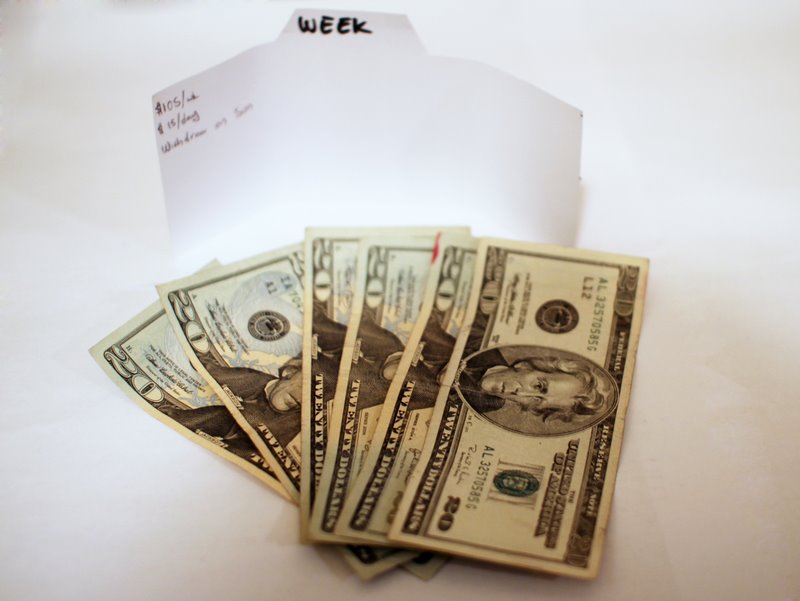
  1. Take your wallet and insert 3 cardboard tabs: Savings, Week, & Expense
  2. At the start of every week, withdraw 7 times your daily allowance. $15 x 7 = $105 and put it into the "Week" section of your wallet.
  3. At the start of every day, take your daily allowance from "Week" and put it at the front of your wallet for general use.
  4. At the end of the day, take any remaining cash and put it in the "Savings" area.
  5. If you run into an expense that you know you'll have to pay later in the week (like a friend buying a ticket to a show for you), take it out of your daily allowance and put it in the "Expense" area.

The Most Important Part

The single most important rule for a stable financial life is: don't spend any money that you don't have. If you only have $3 left in your day's allowance - sorry, but you're not going out to dinner you're having packet noodles today. If you spend less than your daily allowance on a given day, you'll have extra cash in your savings section which you can spend whenever you like on whatever you like.

Some Things You Might Notice
  • You'll make fewer impulse buys. Having to pull cash out of your wallet, and realizing you have a limited amount on a given day makes it harder to spend money on crap you don't really want or need.
  • You'll actually start preparing meals at home instead of thinking you should.
  • You'll recognize just how much money you're spending on cigarettes, an astounding cessation aide.
Traps
  • Gas & Groceries: If you know you buy a tank a week, and spend $50 on groceries, reduce your daily allowance and put enough money for gas and groceries in your "Expenses" section. Also, the earlier in the week you buy your groceries the more money you'll save on eating out.


 Get a wallet as bitchin' as your new budget will be. Note: Bitchin' is in the eye of the beholder.
Put a sticker on your ATM card to remind yourself that it is to be used to withdraw cash only. This is to keep you from accidentally busting your budget.
Your day's spending cash should be in the front-most compartment of your wallet.


At the start of every week withdraw your daily budget * 7 from the bank. This is all the dough you're allowed to spend in a week. Try to get this cash in small denominations so that you can easily split it evenly into 7 days. Don't withdraw more than a week's worth, because if you do and your wallet is lost or stolen you'll be super screwed.

If you don't spend all of your daily allowance on a given day, it should go into the savings tab. If you're a spend-thrift M-Th you can have a fun Fri and Sat night. If you've still got this money at the end of the week, put it in a savings account towards a fun goal like an HD Camera or a plane ticket to Thailand.
This is where you keep cash that you know is owed to somebody else. Be that the City of LA for a parking ticket you just discovered, or your friend who bought tickets to the concert on Friday.

Tuesday, December 14, 2010

Something Scary #2: Saying Hello to Strangers

What I'm Afraid Of:
When I was a teenager I was horribly embarrassed to be around my mother when she would start talking to strangers in line at the super market, or on the street, or at the coffee shop, in short: everywhere. These days I really admire my mom's ability to strike up a conversation, and wish that I could do it too. There's something about talking to strangers that I find absolutely terrifying. Possible reasons:
  1. I was told never to talk to strangers as a child.
  2. The stranger might ignore me.
  3. The stranger might reject me.
  4. The stranger might think I'm stupid.
  5. The stranger and I may having nothing to talk about.
  6. The stranger may never shut up once they get started.
  7. The stranger will think I'm rude.
  8. The stranger may feel physically threatened by me trying to initiate conversation and scream at the top of their lungs.
  9. I might remind the stranger of a buddy from 'Nam, they'll enter into a PTSD episode and stab me to death while screaming "Why Johnny, why?!"

Clearly, some of my fears are more rational than others. But some variation on at least one of them is what prevents me from saying hello.

What I Did That Scared Me:
On my walk home from work today, I committed to saying hello to everyone that I passed. It went pretty well. "Hello" became "Howdy" which became "How's it going" which led to "Did you just say 'Friday Night Blues'? No? Oh, sorry, that's the name of a dance event I go to."

However, there were some people I didn't say hello to, namely anyone who wasn't looking in my direction when I was passing (Reasons: #7, #8). So, not a smashing success, but more often than not I felt the fear but acted anyway.

Something Scary #1 was: Asking a Girl Out to Coffee

Taking Risks in Life

I read a great profile on Jeremy Renner in "Men's Health" of all places. Here's an excerpt:
"If you don't know who you are, how the hell are you going to be able to...?" Renner leaves the thought unfinished, but it would be easy to fill in the blank with a million possibilities, most of them more profound than becoming a movie star. "So I made a very conscious decision to be fearless, to live a life of fear-freeness. I decided to do something every day I was afraid of." Like?
"I swam with sharks," he says, recounting a scuba trip off California's southern coast. "I was terrified of sharks and I'm still terrified of sharks, but at least I was taking action--and not being squelched by something I don't know about."
It's pretty brilliant strategy for becoming a better actor if you ask me, although apparently the idea is nothing new:
Do one thing every day that scares you.
-Eleanor Roosevelt
It seems, that if one wants to play a character on the edge of madness, you must expand your threshold for risk. So I have unofficially undertaken the project of consciously doing things that scare me. I'll be cataloging this risk taking under the "Something Scary" tag.

#27 - #??: The Count Ends Not With a Bang, but a Whimper

It seems my goal of creating something every single day and posting the end-result to this blog has sputtered out a bit. It's not that I haven't been creating things; I have been. It's just this whole business of remembering what I've done, numbering them then posting something that's gotten me out of whack.

A Partial List of Creations Since I Last Posted:

  • Screenplay w/ my Writing Partner
  • Lyrics and Melody for The World's Worst Song
  • Super Secret Christmas Gift(s)
  • Prepared scene for Class
  • Edited short film "Sesame Avenue"
  • Attempted to Cover Radiohead's "Creep" on Ukulele
  • Wrote monologue
  • Revised monologue

I'm tempted to spend the next couple weeks strategizing and restart my count in 2011. Until then, rest assured: I will be acting daily.

Monday, December 6, 2010

Creations

#24 Groundlings Monologue and Screenplay with Partner
#25 Short Film Script
#26 Dance Class with Chryssie Whitehead

Okay, better to post something to try and keep track than lose track altogether.

Friday, December 3, 2010

How To Research a Part

As homework for my class at Margie Haber Studio, I was just given a 4-page scene from the pilot episode of a TV show set in the world of the FBI. My teacher, then asked the class how we planned to prepare. "Boil a lot of water, drink a lot of tea, and eventually get down to work?" I offered. She was not impressed. Instead, she offered up these ideas for learning what is involved in living the life of an FBI agent:

  • Read a book on the FBI
  • Read a crime blotter ( http://www.crimeblotter.org/map/ )
  • Interrogate someone, about anything. "It's my understanding this market stocks papayas. Yet, I don't see any papayas."
  • Investigate something. Try and put the pieces of a mystery together.
  • Call your local FBI bureau, tell them you're preparing for a role, and ask if they have any PR people or agents who would be willing to answer your questions.
Now this may seem a little preposterous, but I don't think I've ever done preparation for a role in this way before. I tend to just read the script a lot and build up a world imaginatively. Which, now that I think about it, seems like a pretty good way to create a performance that's not grounded in reality.

Whenever I get despondent about acting as a career choice, I'm usually able to re-motivate myself with the promise that acting is a way to experience all that life has to offer. I can be a policeman one day, a fireman the next, a schoolteacher, a doctor, a recluse, a roustabout - basically I'm paid to explore all of my childhood fantasies and I'm never forced to give up one in order to be another (forgot to mention: Astronaut!). But the fact of the matter is, it's been a hollow promise. I really haven't done much in the way of really exploring those other lives.

So my challenge to myself, and to other actors out there, is to: dare to live the life of the character.

-------------------------------------

So what is it like to be an FBI agent?
Some preliminary investigation (one made-for-tv documentary and some web searching) on what's involved in being an agent has turned up:

  • To be an FBI agent, you need a 4year degree and at least 3 years professional experience.
  • Agents are haunted by unsolved cases for basically their entire lives.
  • Agents undergo extensive training that simulates emergencies just in case one ever occurs, sometime you'll simulate something for years before you actually encounter it.
  • Agents work incredibly long hours, get little vacation time, and are paid government wages.
  • Working for the FBI gives most agents an incredible sense of purpose; your work has meaning. (This is the bit I'm most excited about playing)
  • There is an acceptance that there will be another terrorist attack, and there is an accute fear that they won't have done all they can to prevent it.
  • Agents often have to be hyper-vigilant in situations where nothing bad ever actually happens nor was going to happen (putting together security plans for big sports matches, etc).
  • Working as an FBI agent often involves less action than working as a regional police officer, but it offers the promise of working on some of the largest and most important cases in the States.
  • You might get the opportunity to work in beautiful foreign locales.
-------------------------------------

Oh, and Creation #23 was a cold-reading from an episode of Law & Order. I haven't acted across from someone else in about a month, so once I got through the fear and anxiety of being rusty, it felt really good to be back in the swing of things.

Wednesday, December 1, 2010

#21 & #22: Acting and the Edge of Madness

Creation #22: A Rumination
An actor friend of mine often rails against what he calls "safe" actors. A safe actor is one who does a lot of homework, has a pretty clear sense of how the scene should go, and delivers a consistent totally usable performance. When thrown into a scene with little time to prepare, they deliver a very restrained performance. In my mind being a safe actor isn't a horrible thing, Harrison Ford once said that on days where he doesn't feel in it, he does "as little as possible," capitalizing on the Kuleshov Effect.

Then there are the... bold actors? The unpredictable? The risk-takers. The dynamic, charismatic, cornered animals of the acting world. When I think about my favorite film-acting performances, they came from risk-taking actors, often early in their careers. Some Examples:

Robert De Niro in "Taxi Driver"
Daniel Day Lewis in "There Will Be Blood"
Dustin Hoffman in "Midnight Cowboy" or "The Graduate"
Heath Ledger in "The Dark Knight"

If there's one thing I most enjoy about these performances, it's the sense that in the next moment anything could happen. These are actors existing on, what at least appears to be: the edge of madness. And if you hear anything about their process, you wouldn't be faulted for thinking that at times they've tipped over the edge.

If you look at recent efforts from De Niro and Hoffman, it seems that at some point they lost their edge. Their performances are still charismatic and enjoyable, but they no longer seem wholly unpredictable. Comparing early interviews with more recent ones, they also appear to have mellowed as people. I'd much rather have a beer with De Niro in his 60's than De Niro in his 20's.

The question, at least for myself is: Is is possible to lead a safe, happy, sane, restrained, pleasant life and still turn in a compelling performance that hints at a life on the edge?

Creation #21: A (Micro) Adventure
Okay, while not technically a creation, I feel like it counts as my homework for the day as it explores the question posed above. This was a recent status update "In a possibly ongoing experiment in risking rejection I asked a stranger out to coffee. 30sec of conversation later, I desperately wished the person had refused."

Yes, my version of living dangerously is asking someone on a totally innocuous coffee date. I get a similar jump in heart-rate when I write a strongly worded email that I never send. I suspect that if there is a correlation between an unpredictable life and an unpredictable performance, I've got a lot more growing to do.

Monday, November 29, 2010

Creations #16-20

Creation #16: Salted Caramel Cheescake

Creation #17: Lemon Meringue Pie 

Creation #18: Apple Pie

Creation #19: Roast Turkey
No Photo

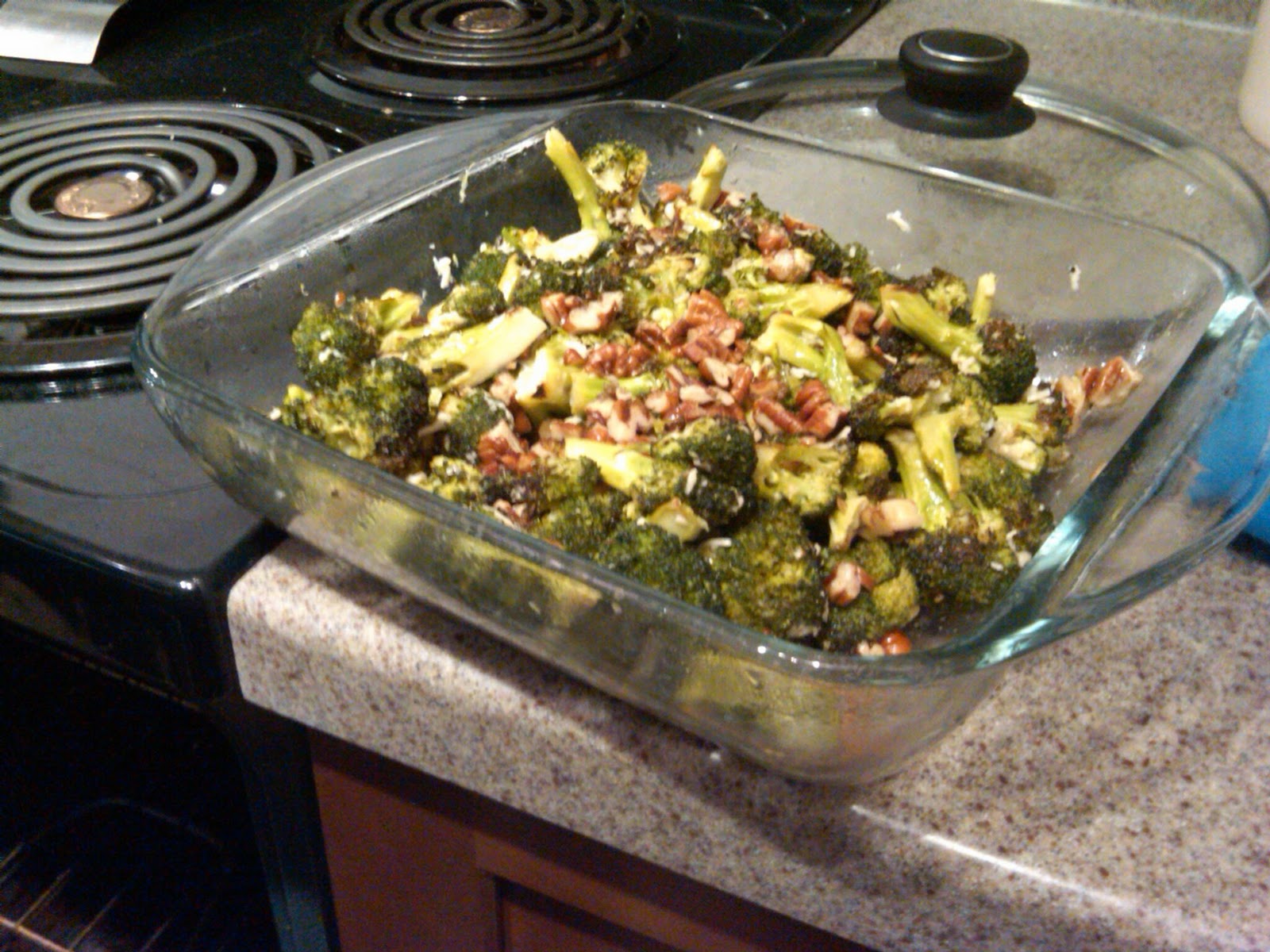
Creation #20: Roasted Broccoli with Candied Pecans

Creation #21: Photograph: Column of Water

Thanksgiving, thanksgiving, thanksgiving. I fell off the creation wagon a bit since my last post, but now is a time to rededicate myself.

Monday, November 22, 2010

Creation #15: A 3-Page Scene

There's a theory, I'm not sure how widely held, or scientifically founded, that says: Our dreams are a peek into our brains trying to solve problems. Basically like watching a YouTube video of a baby trying to put a peg into a hole - only it's directed by Michel Gondry.


I don't dream much. At least not that I remember. I wake every morning with little sense of the time between my head hitting the pillow and my instantaneous and strong desire to kill the electronic bird at the foot of my bed.

I'm going to assume that I don't dream (even though I probably do and just fail to remember them). I think instead of dreaming, what I do is process while I'm awake. When left with time alone and nothing to do, I think, about anything and everything. Mostly about things that might go wrong in every possible permutation of the future. That's actually a large part of what this project is: instead of worrying, or self-pitying, or self-despising, I will create! Create! CREATE! (You see the louder I get the more purpose I feel... sure.)

One of my favorite outlets seems to be writing dialog. I think I've got something of a knack for it. Assuming that all a "knack" requires is voluminous output of questionable quality. Here's the thing, all of my dialog is between the same person. Many voices, many attitudes, many perspectives, but in the end: one person. If there was a pattern to the scenes I write, it goes something like:

Person A: I hate widgets.
Person B: I love widgets.
Person A: I see why you love widgets.
Person B: I see why you hate widgets.
Person A: Can we agree that we no longer have a strong opinion about widgets.
Person B: I suppose, that is the reasonable thing to do.
Person A: I can't help thinking life would be better if I had a strong opinion about widgets.
Person B: Me too. Too bad we don't.
Person A: Once you eat the apple 'ey?
Person B: Yep, there's no going back to paradise.

Which is to say: writing is mostly a place for me to evaluate my opinion on a situation only to discover that in the end I don't have a particularly strong one. This of course also makes my writing pretty far from dramatically compelling.

Yet I persist. Creation #16: was a three page scene wherein two characters discuss the absurdity of a writer writing about the creative process. The briefest of excerpts:

TOMMY: Really, Devon? This is what our conversations have become? You might as well ask me what sort of tree I wanna be.

PS: If you haven't noticed, I've gone back to a daily update. It's easier for me, preferable for my RSS subscribers, and probably quite annoying to my email subscribers. Sorry to my email subscribers!

Sunday, November 21, 2010

Creation #14: An Icky Limerick

My friend Heather is working on a project in her book arts class, so she put out a call for original limericks. The title of the book will be Limer"ICK" and it of course will be about all things icky.
There once was a fellow named Jack.
Who coughed blood into a sack.
He retched every day,
For lack of co-pay.
His insurance you see, was Aflak.
For instructions on writing your own limerick, visit: http://www.gigglepoetry.com/poetryclass/limerickcontesthelp.html

Again, nothing brilliant. Also, I'm a little disturbed that the rhyming part of my brain seems absolutely fixated on respiratory ailments. That said, word play is something I really appreciate, so it's fun to play with even though I'm pretty horrendous at it (excuse: lack of practice).

Creation #13: Lemon Meringue Pie


Well, that was the goal. It turned into an over-wet half-baked pie crust, sans lemon, and sans meringue. It seems there are some projects in life that can't be rushed and that don't respond well to haphazard instruction-following. I suspect that there is more leeway in how one can operate a nuclear power plant than in how one can bake a lemon meringue pie.

4 tbs of ice water turned into 5 tbs of tap water, which turned into a sloppy pie crust that didn't come together. Matters weren't helped when I put the pie crust in the oven, and returned in 20 min to discover I had turned the oven off instead of on. What should have been a deliciously crispy golden brown crust was a soppy pile of raw dough collected at the bottom of my pie pan.

What I Learned:
-Baking anything worthwhile is an hours long process that doesn't respond well to multitasking.
-Follow instructions exactly, unless you know the mechanics of a process well enough to know what effect your deviations will have on the final result.
-Even a failed pie is better than a pie not attempted, the crust (once baked again) made for a pretty tasty snack.

Thursday, November 18, 2010

Creations #6 - #12

In an effort to minimize the number of emails going out to my readers, I've bundled 6 creations into one post.


#6: A Dog House
Well, that was the goal. The end result looks like an insulated dog lean-to.

What worked:
My dog should be insulated from the worst of the elements this winter.

What I learned:
Don't undertake a project without the time and energy necessary to complete it. Being tired can lead to some pretty serious compromises. For film-making and acting: build enough time into the schedule so that you don't feel rushed into completing something.

#7: A Scene & The Outline for a Screenplay
The end of every single one of my romantic relationships has precipitated the creation of a large memorializing piece of artwork. My first girlfriend got a series of hand-drawn portraits. My second a painting. My last major breakup got about 30 monologues from different people of different ages talking about what they understood about relationships. My most recent has turned into, well... right now it's a scene and an outline for a screenplay.

But frankly, these are all incredibly embarrassing pieces. Some artwork is for the public, and some is therapeutic.They are not to be published in any form until 200 years after I kick the bucket.

#8: A Sonnet
Okay, so this turned out horribly. I think it's the first and worst sonnet ever to be written about a person who's received a lung transplant (not my original idea, but that's what forcing rhymes does). I'm finally appreciating just how astounding Shakespeare's body of work truly is.
Until sun sets ever he must contend
his life is worth its weight in borrow'd breath
these donor's lungs he fears they will rescind
So e'er more he gives at guilt's behest
Soup for the sickly and toys for the blind
Books for orphans, a shoulder to cry on
Daily genuflection before Lord divine
Planting a redwood for anon, anon
But when night draws drapes over our bright star
A dread upon him deeply does descend
Extorted goodness is in sooth a sham
And feigning saintdom pulls his bitter end
One life to live, a wicked bargain seems
The weight of two lifts only in his dreams
#9: A Comic
Okay, so I really phoned this one in. I had to create something before I passed out. I'm starting to feel just what a big commitment a daily creation really is.


#10: A Modern Dance
Okay this was really fun and totally hilarious to watch. Unfortunately me prancing around in tights, a wig and mustache is incredibly blackmail-worthy so the webcam video is not going online.


#11: A Monologue
After auditing the most intense, draining, and terrifying acting class of my life I wrote an incredibly nihilistic monologue. Then I wrote a manifesto to actors, the thesis of which was basically: stop thinking what you're doing is art, get a job, and hire a therapist. If what's happening in that class is what it takes to be an actor, I have no interest.

Honestly, I'm still reeling from all that I witnessed that night. But cooler heads have prevailed, no need to post a manifesto and blacklist myself. I take back my thesis, it's a noble profession and all that.


#12: An Abstract Painting
I really appreciate that with an abstract, there's no right and wrong. It can be incredibly relaxing, and more often than not it's the materials rather than some preconception that defines the final result.

Friday, November 12, 2010

Creation #5: Short Subject "A Shed in the Woods"


Daily Creation #5 - A Shed in the Woods from Donovan Keith on Vimeo.

Based on the standard cabin in the woods horror genre, this is an experiment in what I can accomplish in a single afternoon by myself. There's a lot that I would like to fix (Foley for one) but probably won't. The goal is to create a "complete" project in a single day, and learn from my mistakes for the next one.

What Worked:
  • Location, location, location - Finding a "filmic" location is half the battle.
  • Tho logo on my t-shirt and jacket were too distracting, so I turned them both inside-out and it worked.
  • The "dead" shot was surprisingly successful.
  • My personality came through in my one line.
  • Shooting through objects can create a sense of being watched.
  • Some of the cinematography is quite pretty; I'm buying a DSLR when next I have the cash.

What I Learned:
  • Stories need a beginning, not just a middle and an end. If I'm going to recognize the "monster" in the end, I should know that I'm looking for him in the beginning.
  • POV shots only cut, if there's a closeup of a face first.
  • Shots of shoulders to feet with no head are just awkward.
  • Things that feel really unnatural look fine on video.
  • If an action is only implied, you can make it real with sound. So know what sounds you need to capture to create that reality.
  • Long takes of long shots feel long.
  • Final shots can be meditative if you've earned them, so give them time to breathe.
  • If you're not fully committed, you should just play it deadpan; at least that can be interpreted as shock.

Creation #4 is Exercise #1: Performing Actions with a Physical Disability

Acting Exercise: Perform a simple physical action that is made difficult by a physical disability as if your life depended on it.


Inspiration: There is a scene in "Kill Bill Vol. II" where Uma Thurman's character is attempting to eat a bowl of rice with chopsticks. A seemingly simple task made nearly impossible by her battered hands and state of total physical exhaustion. Why doesn't she just eat the rice with her hands? To do so would disappoint her kung fu teacher Pai Mei; the consequence of which would feel worse than death. The scene is about 5 minutes long, Thurman's character never says a word, and it is absolutely gripping.

Instructions:
  1. Pick a physical action to perform.
  2. Pick your physical disability.
  3. "Script" a high-stakes situation where this would need to occur.
  4. Set a timer for 5min. - The timer is there to keep you out of your head, you no longer have to direct the scene, you can just live it.
  5. Take some time to really build up the scenario, make sure you have the important relationships.
  6. Begin performing your physical action, don't stop until the action is complete or the timer has gone off.
An Example:
  1. The action: Make the bed perfectly
  2. The disability: Shot in my dominant shoulder
  3. The situation: It's 10pm. I just murdered my wife's lover and stuffed his body under the bed. My wife, who works the night shift, just called to say she forgot her work keys and that she'll be back in 5min to pick them up. She's a nurse, she's anal-retentive about having a neatly made bed. I need to be in a perfectly made bed reading a book, with my right shoulder under the blankets, before she gets home so that she won't think anything is up.
Okay, if the above example seems a bit contrived, it's because I came up with it while getting ready for bed. Nonetheless it was a plausible enough situation that by the time I finished, my heart was pumping a mile a minute and I had a very tidy looking bed.

Thursday, November 11, 2010

Creation #3: Screenplay for Good Cop, Dog Cop

I am shamelessly in love with my dog, Kahana. Which should go some lengths to explain why it is I spent an hour last night writing a 2 page script for a sketch called "Good Cop, Dog Cop."

It's the worst sort of derivative hack fest, but now there's a good chance that Kahana and I will be making another short film together; so it can't be all bad. Oh wait, the final line is "Bark 'em, Danno." So I suppose it is all bad for anyone who is going to eventually have to sit through it. That said, it feels good to be creating.

And since no post is finished without multimedia, here's Will Farell's "Good Cop, Baby Cop."


Wednesday, November 10, 2010

Creation #2: Sonnet 60 by Shakespeare

What did I create?
A dramatic interpretation of Shakespeare's Sonnet 60 shot on a DSLR. For those of you who don't know the canon by heart, I give you Sonnet 60:


Like as the waves make towards the pebbled shore,
So do our minutes hasten to their end;
Each changing place with that which goes before,
In sequent toil all forwards do contend.
Nativity, once in the main of light,
Crawls to maturity, wherewith being crown’d,
Crooked elipses ’gainst his glory fight,
And Time that gave doth now his gift confound.
Time doth transfix the flourish set on youth
And delves the parallels in beauty’s brow,
Feeds on the rarities of nature’s truth,
And nothing stands but for his scythe to mow:
And yet to times in hope my verse shall stand,
Praising thy worth, despite his cruel hand.

In short: time waits for no man, and while we may start young we'll all get old; even you Beautiful.

The process:
It was simple enough, I browsed through some of Shakespeare's more well-known sonnets and settled on one I liked. I then went about dramatizing it by making decisions about who I was talking to, where I was, and what I wanted. I setup a pillow as my scene partner, focused the camera, and did a few takes.

What went well?
Despite having no one else physically present, I managed to build a strong enough sense of who I was talking to that I was affected by the situation.

What lessons can I take from this?
My work was strongest and the least "actor-ey" when I allowed myself to let go of my preconceptions for how the scene should go and respond to what was actually happening. When I tried to recreate elements I liked from a previous take, I got stuck in my head and it showed in the final result.


To Post The Video or Not?
I'm torn about whether I should post all of my creations to this blog. I appreciate the accountability, and the organized record of my pursuits. However, if I post anything less than my best work I risk making a bad first impression. Thoughts?